Basic Plan
- Quarterly inspections
- Priority service calls
- 10% discount on repairs
- Basic maintenance included
Commercial water heater and boiler service assesses, repairs, installs and maintains equipment serving a business or multi-unit property. You may need it for outages, inconsistent delivery, boiler faults or a planned system change. Tell us the equipment and operating constraints so the scope matches the facility rather than a residential replacement assumption.
CSLB #1041460 · Licensed & insured · Serving OC, LA & the Inland Empire


Commercial hot water shortfalls can involve production, storage, controls or distribution. A restaurant outage and a cold apartment wing are different problems even if both involve a heater. Record demand periods, affected zones and fault history. A working heater may still deliver poorly through failed recirculation or control conditions. Assessing the system avoids adding equipment to mask a delivery fault. Tell us whether domestic hot water, space heating, steam or a process application is affected and identify the site contact who can authorize work.
The existing equipment scope includes natural gas and electric water heaters, commercial storage tanks of 50-500+ gallons, commercial tankless and high-efficiency models. Distribution work includes central hot water, zone controls, recirculation pumps and smart controls. Backup heaters, redundant systems, emergency shutoffs and monitoring are also part of the existing scope. Backup capability must be checked before relying on it during a shutdown. More equipment does not automatically mean every part of the building can stay in service while work is performed.
Boiler work covers steam, hot water, condensing, combi and industrial equipment. Existing listed brands are Weil-McLain, Burnham, Crown Boiler, Peerless, Slant/Fin, Cleaver-Brooks, Fulton, HB Smith, Hurst Boiler and Superior Boiler. Service includes burner and control repairs, heat exchanger work and pump or valve replacement. Share the model and operating history so parts and testing can be discussed. A repeated lockout is information to investigate, not an instruction to keep resetting equipment or bypass a protective control to sustain production.
Existing industry applications include restaurants and food service, hotels and hospitality, multi-unit housing, healthcare, manufacturing and offices. Needs can include dishwasher-compatible temperatures, grease-exposed settings, guest demand, tenant distribution, infection-control coordination and process temperatures. Work is planned around the facility requirements and approvals. A service visit does not certify every regulatory obligation at a site. Confirm responsibilities with facility staff, especially where shutdowns affect sanitation, patient care or another critical use. Current emergency availability is confirmed rather than presented as guaranteed uninterrupted operation.
Establish operational priorities. Discuss schedules, critical uses, affected zones and consequences of a shutdown. Identify the responsible contact and access, security or infection-control procedures. Confirm the application so service starts with the actual requirement rather than assumptions about building type.
Map equipment and distribution. Identify heaters or boilers, storage, recirculation, controls and backup capacity. Review labels, records and drawings when available. This separates an appliance fault from delivery or control problems when multiple units share demand or serve distinct temperatures.
Diagnose the reported condition. Evaluate symptoms against operating conditions. Check relevant burners, controls, pumps, valves and heat transfer components. Explain limitations before recommending work, especially if an intermittent fault, inaccessible pipe or missing record prevents a confident initial conclusion.
Develop the approved solution. Existing installation scope includes design and engineering, permits, equipment installation, startup and commissioning. Define deliverables and responsibilities. Separate immediate repair from longer-term capacity improvements and maintenance rather than leave the meaning of an engineering or service package unspecified.
Coordinate approved work. Agree on isolation, access, shutdown communication and site precautions. Consider remaining services and verified backup arrangements. Discuss off-hours scheduling where applicable without promising no disruption. Additional findings require a revised scope or separate authorization from the designated decision maker.
Commission and record results. Check startup, controls and operation as appropriate to the equipment and its distribution role. Document completed work and remaining concerns. Existing preventive programs include scheduled maintenance, performance optimization and energy assessments; those are planned separately from an individual repair or installation.
Commercial work follows the equipment application, local authority requirements and manufacturer instructions. Boilers and process uses are not interchangeable with a residential tank replacement. Confirm engineering documentation, permits and inspections for the scope. Applicable restraint, relief discharge, expansion control and drainage are evaluated for the system. Relief piping must not be capped or used as a routine shutdown control. Gas supply, combustion air and venting must suit the installed equipment, with testing performed as appropriate to the work rather than bypassing safety to keep a business open.
Food service can involve health department requirements; healthcare can require infection-control procedures and facility approvals. Define these responsibilities with the site team. An equipment repair should not imply it certifies a whole building or every industry standard. Condensing boilers and heaters need model-approved condensate handling, while electrical and control work follows applicable requirements. Existing plan benefits are not a substitute for required installation approvals. Discuss any changes to piping, controls or equipment with the facility contact before assuming they are included in routine maintenance.
Commercial quotes depend on configuration, application and the approved scope. Equipment capacity, fuel, vent routes, gas supply and controls integration influence installation. Access to a rooftop or mechanical room introduces different handling from a garage replacement. Procurement and shutdown requirements also matter. Request a free quote identifying diagnosis, removal, supporting connections and commissioning. Separate a recurring service contract from the immediate project so ongoing care is not mistaken for work already included in one repair authorization or equipment purchase.
Provide equipment schedules, drawings, codes and shutdown restrictions when available. Explain critical operating periods and redundancy needs. Installation proposals should clarify engineering, utility changes, permits and inspection responsibilities. Ask how unavailable parts, concealed conditions or additional testing affect authorization. Existing Basic, Professional and Enterprise contracts are shown below without dollar amounts. Their contents remain unchanged; the page adds no new coverage or performance guarantees. Confirm the facility-specific terms and scope instead of assuming a standard plan applies to every equipment arrangement.
Discuss the scope for your property
Request serviceService duration depends on the fault, equipment, parts, access and testing. Replacement or engineered work may also need procurement, utility coordination, permits and facility approval. Confirm sequence after assessment. Emergency calls are answered 24/7; actual commercial scheduling is checked for the address and equipment.
Discuss which services will be interrupted and whether existing redundancy can support operations. A staged approach may be useful, but capacity, controls and isolation must be verified. Do not rely on a generic completion promise or assume a second unit automatically covers peak demand during shutdown.

Chris Flores, Founder & Owner
We focus exclusively on water heaters, including traditional tank systems, tankless water heaters, and energy-efficient heat pump water heaters.
Today, Chris remains deeply involved in daily operations, quality control, and customer experience.
Meet our team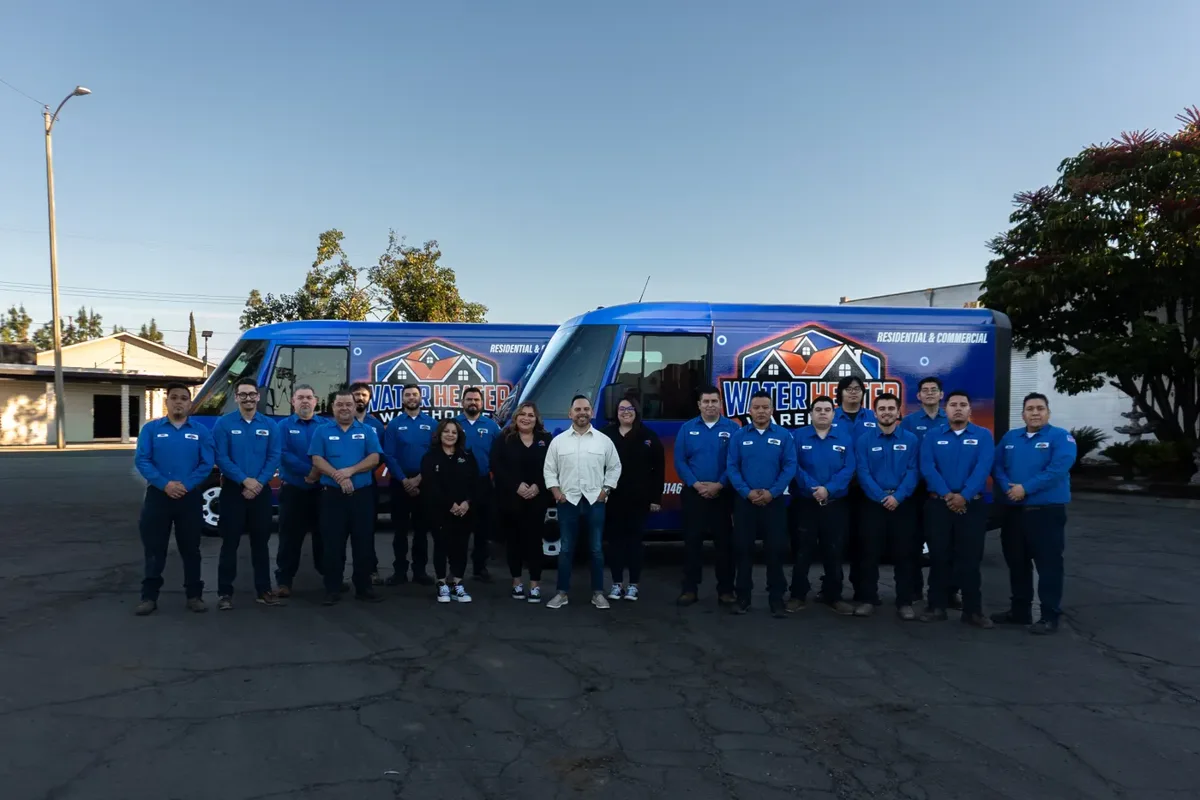
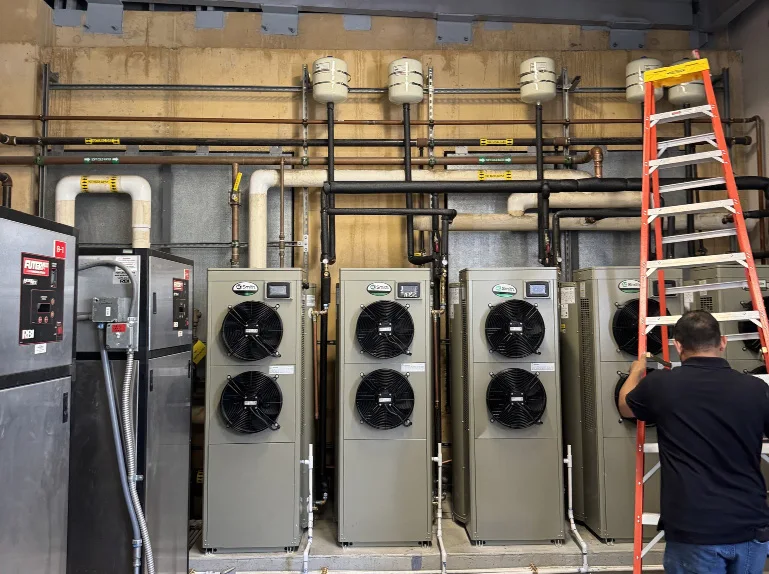
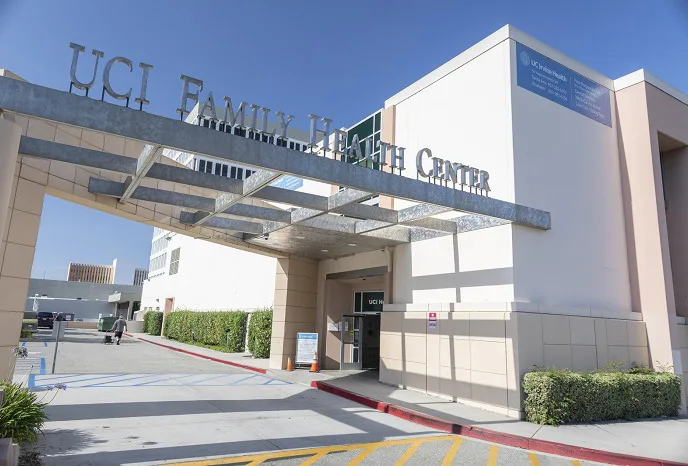
Water Heater Warehouse partnered with SoCalREN to replace 11 aging gas water heaters with 12 high-efficiency electric heat pump water heaters across five UCI Health medical facilities.
View the UCI Health projectYes. The existing scope covers steam and hot water boilers alongside commercial storage and tankless equipment. Share manufacturer, model, application and fault details. Those determine the appropriate assessment and parts discussion; a commercial label alone does not identify the heating or distribution requirements.
Yes. Pumps, controls and distribution can prevent a functioning heater serving distant fixtures properly. Assess production and delivery separately before adding capacity. Record which zones are affected and when. A cold wing and a whole-property outage may need different diagnostic work even with the same primary equipment.
The existing installation scope includes design and engineering. The proposal should define deliverables, responsibilities, equipment criteria and approvals. Do not assume the phrase includes every drawing or regulatory submission needed at a site. Confirm the required documents and authorized work before the installation proceeds.
Identify affected sinks or equipment, busy demand periods and dishwasher requirements. Explain whether supply is low, temperatures fluctuate or the system is completely off. Provide equipment details and operating constraints. That lets assessment follow the actual problem rather than select replacement capacity solely from the business category.
No. Backup capability depends on capacity, isolation, controls and condition. Verify what can stay operational during the proposed work and document limits. Existing backup equipment can assist planning, but its presence does not guarantee uninterrupted operation or eliminate the need to communicate shutdowns with facility staff.
No. Recurring care is defined separately from corrective work. Existing Basic, Professional and Enterprise contents are preserved here, but the facility-specific agreement needs confirmation. A repair authorization addresses the immediate scope; a contract sets future visits and benefits. Ask which tasks and parts each arrangement includes.
Request a free quote with equipment details, symptoms and site restrictions so the proposed work includes system needs and shutdown planning.
(714) 244-8562