
Basic Plan
- Annual safety inspection
- Tank flushing service
- Basic component check
- 10% discount on repairs
- Service reminders
A water heater maintenance plan arranges recurring inspection and care rather than a single repair. It suits owners who want a service schedule and the benefits listed in their selected plan. Existing symptoms still need assessment, and a membership does not guarantee a heater will never fail.
CSLB #1041460 · Licensed & insured · Serving OC, LA & the Inland Empire




A plan creates repeatable opportunities to inspect equipment and discuss changes. It does not make an aging heater new or eliminate failures. Its usefulness depends on appropriate care, clear findings and a schedule suited to the appliance. Keep inspection records so the next visit can compare deterioration rather than start without history. Contact us between visits if leakage or a safety concern appears. A planned appointment is not a reason to let an active problem wait until the next scheduled inspection.
Tank and tankless care are different. Storage equipment collects sediment at the bottom, where buildup can interfere with heat transfer and contribute to noise. Anode condition also matters because that component helps protect steel from corrosion. Tankless equipment can accumulate mineral scale in the heat exchanger and debris at filters. Those need model-appropriate descaling and cleaning, not the same draining procedure as a storage tank. Ask how the plan applies to your particular equipment before treating every listed task as universal.
Mineral content varies across Southern California water supplies. Where the local supply is hard, sediment and scale can contribute to reduced heat transfer, restricted passages and changing performance. Maintenance is guided by manufacturer instructions and observed buildup, not a claim that every city has identical water. Keep notes on valve condition, deposits and hot water changes. Water treatment may reduce accumulation but does not eliminate filter, safety or control checks. A routine should respond to the appliance and supply rather than one unsupported frequency for every home.
The existing Basic, Professional and Premium plan inclusions are shown below unchanged. The selected plan defines visit frequency and benefits. Repairs found during an inspection need a separate explanation of coverage and authorization. Ask whether parts, additional diagnosis and multiple heaters are included before enrollment. Confirm warranty and priority terms rather than interpret them as unlimited repairs or a fixed arrival time. If only one service visit is needed, the separate tank-flush or tankless-descaling pages explain those options without requiring membership.
Confirm equipment and coverage. Record the brand, model, fuel, location and history. Match the appliance to the selected plan and clarify access needs. A scheduled inspection should start with a clear account of covered tasks rather than assume every heater and replacement part has identical terms.
Discuss changes since the last service. Review noises, temperature changes, leaks, codes and household demand. Ask whether symptoms affect one fixture or all outlets. This separates routine care from a fault requiring diagnosis and avoids treating cleaning as the answer to every complaint.
Inspect accessible safety components. Existing plan checks include gas connection leak testing, electrical connection inspection, ventilation checks and carbon monoxide testing as appropriate. Note corrosion, controls and discharge arrangements. Describe access limitations so the record reflects what was inspected rather than imply an unrestricted safety certification.
Perform equipment-appropriate maintenance. The existing maintenance scope includes tank flushing and cleaning, sediment removal, component lubrication and filter replacement where applicable. Tankless heat exchanger cleaning uses a different procedure. Check model instructions and valve condition before proceeding, especially where deterioration or missing service connections complicates the task.
Review wear and operation. Existing performance checks include temperature setting verification, pressure relief testing, thermostat calibration and an energy assessment. Anode inspection or replacement follows selected coverage and access. Explain findings and whether proposed parts are included before treating additional work as automatically approved.
Record results and next actions. Summarize completed tasks, accessible component findings and limitations. Distinguish repairs from routine upkeep. Retain the record with prior visits and discuss the next interval using plan terms, manufacturer guidance and observed conditions rather than promise maintenance prevents every breakdown.

Maintenance can reveal restraint, venting, relief discharge, electrical or expansion concerns. Record the observed condition and recommended correction. A routine visit does not automatically bring an older installation up to current requirements. Relief piping must remain open to an approved discharge point; a drip is diagnosed, never plugged. Tank restraint and access are checked where relevant. Gas or electrical safety concerns require the appropriate assessment rather than a cleaning-only response or a promise that an inspection certifies everything hidden inside the property.
Storage tank seismic straps belong in the upper and lower thirds, with the lower at least four inches above controls. A drain pan is required in applicable locations, and closed plumbing systems need expansion control. Tankless checks instead follow venting, supply and condensate requirements for the model. Corrective work can need separate local permits. The plan does not replace manufacturer instructions or a replacement permit. Explain any proposed alteration and its scope before assuming it forms part of the scheduled maintenance tasks.
Membership selection depends on visit frequency, equipment and included care rather than the symptoms of one breakdown alone. Compare the existing plan lists. A recurring schedule differs from a one-time sediment flush or descaling visit. Ask how coverage applies to fuel type, the number of heaters and access. We do not publish dollar amounts here; request a free quote and details before enrolling. Listed discounts and warranty benefits remain the existing plan terms, not new promises added as part of this page upgrade.
Clarify replacement parts, additional diagnosis and corrective repairs before enrollment. An inaccessible anode, deteriorated valve or active leak may change what is appropriate on a visit. A plan is not permission to carry out unapproved extra work. Ask which recommendations are included, separately quoted or better addressed by replacement. Keep the membership terms for reference and confirm scheduling benefits when service is needed. Priority does not itself establish a guaranteed arrival window, and preventive care cannot restore a corroded tank body.
Discuss the scope for your property
Request serviceVisit length depends on equipment, access and accumulation. A tank with heavy sediment or a tankless system missing service valves may need additional work before maintenance can be performed normally. Ask about hot water interruption and preparation. Specific appointment duration is confirmed for the actual task.
The existing plans state annual, bi-annual or quarterly care as applicable. Manufacturer guidance and findings also inform recommendations. New leakage, an error or changed performance should be reported between visits. The schedule is not a guarantee that equipment remains fault-free until the next appointment.

Chris Flores, Founder & Owner
We focus exclusively on water heaters, including traditional tank systems, tankless water heaters, and energy-efficient heat pump water heaters.
Today, Chris remains deeply involved in daily operations, quality control, and customer experience.
Meet our team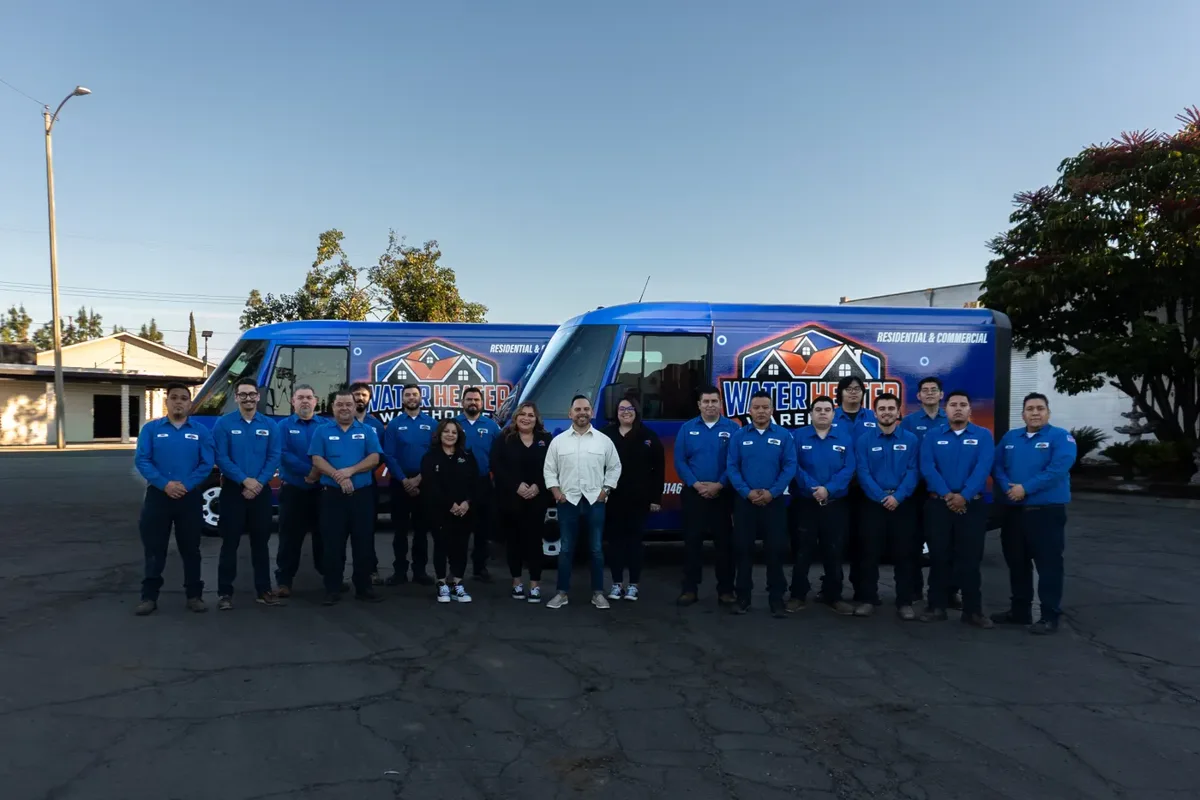
No. Visits and benefits are defined by the selected plan. Parts and additional diagnosis may have different terms. Confirm coverage before enrollment instead of assuming every future failure is included. The technician should explain findings and obtain approval for any separately quoted corrective work.
No. Storage flushing removes collected sediment. Tankless service can involve heat exchanger descaling and filter cleaning using the model procedure. Ask which tasks apply to your unit and selected coverage. Similar maintenance labels should not obscure that the equipment requires different service methods.
Routine maintenance cannot restore a corroded pressure vessel. A leak needs diagnosis to distinguish the tank from a fitting or valve. A tank-body failure requires replacement consideration. Do not wait for the next membership visit if water is escaping or electrical equipment is wet.
Not without checking condition and history. Heavy deposits, damaged valves and corrosion can complicate the procedure or limit benefit. Discuss those findings before proceeding. A cleaning visit cannot reverse tank corrosion, and clear discharge alone does not establish every component is healthy.
Priority is an existing scheduling benefit, not a new response-time guarantee. Confirm current arrangements when requesting service. Availability and the actual work still need discussion. No fixed emergency window is added here, and a maintenance membership does not promise uninterrupted hot water.
Keep model details, inspection findings and repair history. Record recurring symptoms and visible changes between visits. Photographs taken from a safe place and noted error codes help explain problems without dismantling equipment. Prior records let the technician compare condition rather than rely on a single inspection.
Ask for a free quote and confirm selected plan coverage, equipment details and any existing symptoms before arranging recurring care.
(714) 244-8562