






Water Heater Warehouse - Emergency Water Heater Repair & Installation Fullerton, CA

    Water Heater Installation in Orange County, CA

    Water heater installation puts a correctly sized tank, tankless or heat pump system into service with the connections and safety provisions it needs. You may need it when a heater fails, a remodel changes demand or you want to change equipment type. Start with the installation options below, then request a free quote for your property.

    CSLB #1041460 · Licensed & insured · Serving OC, LA & the Inland Empire

    Let’s plan your installation

    Request water heater installation

    Tell us about your property and the water heater you need.

    What happens next

    1. 1

      You send the request

      Your property, equipment and installation needs.

    2. 2

      We call to confirm details

      We review the scope and discuss the next steps.

    3. 3

      A licensed tech arrives

      Your visit is arranged after details are confirmed.

    Prefer to talk about your installation?

    (714) 244-8562

    CSLB #1041460 · Licensed & insured

    Which water heater installation suits your home?

    Equipment selection begins with how you use hot water. Storage capacity, recovery and simultaneous fixture demand describe different needs. A suitable recommendation considers the busiest periods rather than relying only on bedroom count or the old label. Tell us about overlapping showers, a large tub or a planned bathroom. A working heater that runs cold is not automatically too small; a failed component can reduce its output. An installation assessment should distinguish a sizing problem from a repairable fault before you decide to replace it.

    The location shapes your options. A replacement may need different water piping, venting, electrical connections or drainage. Equipment that fits through a doorway still needs operating clearances and room for future service. A new tank can be wider or taller despite matching the old capacity. Wall-mounted equipment needs structural support and an approved vent termination. A heat pump needs enough air volume and a condensate route. These requirements are considered together so the recommendation fits the actual garage, closet or utility space.

    Different technologies involve different tradeoffs. Storage holds a hot-water reserve and replenishes it after use. Tankless heats flowing water but remains limited by simultaneous demand and temperature rise. A heat pump moves surrounding heat into a storage tank, with location and operating mode affecting recovery. Tankless units often last 15-20 years with regular descaling, but service life depends on equipment and conditions; that is not a warranty. Compare complete installation requirements and maintenance needs rather than assuming one technology fits every property.

    This hub is the starting point, not a substitute for a site review. A proposal should connect your choice to available fuel, electrical supply, venting and access. Changing technologies is different from replacing like-for-like equipment. Ask which existing connections can remain, what needs replacement and whether relocation is worth considering. SoCalGas offers rebates on qualifying tankless units. Check the linked rebate guide and current program terms rather than counting an incentive as guaranteed. We do not publish installation prices or rebate amounts here.

    Six parts of a carefully planned installation

    1. 1

      Review household demand. Describe fixtures used together, the number of occupants and planned changes. Share whether the current heater runs cold, leaks or struggles after repeated use. This helps separate sizing from repair and gives recommendations a basis beyond copying the existing label.

    2. 2

      Inspect the installation space. Check location, access, clearances and the routes for water, fuel, electricity, venting and drainage. A garage, closet, attic or exterior enclosure can restrict placement or future maintenance. Those restrictions should be identified before equipment selection.

    3. 3

      Compare suitable equipment. Discuss storage and recovery, tankless flow or heat pump placement as applicable. Review supporting work for each choice so the decision includes the full project, not just specifications or assumed energy savings. The option links above explain separate installation approaches.

    4. 4

      Define the approved scope. Identify equipment, connection changes, removal, permits and inspection responsibilities. Separate required items from optional improvements. Explain how newly discovered conditions will be presented for approval rather than assuming every possible upgrade is included in the original proposal.

    5. 5

      Remove and connect equipment. Arrange safe shutdown and protect the work area before disconnecting the old appliance. Complete approved connections for the new model following its instructions. Preserve service access, including filters, shutoffs, valves and electrical controls that will need attention later.

    6. 6

      Check operation and explain care. Perform startup, connection and temperature checks suited to the model. Explain controls and shutoffs, maintenance requirements and any inspection follow-up. Retain the model information and installation documents for future service rather than relying on the old appliance instructions.

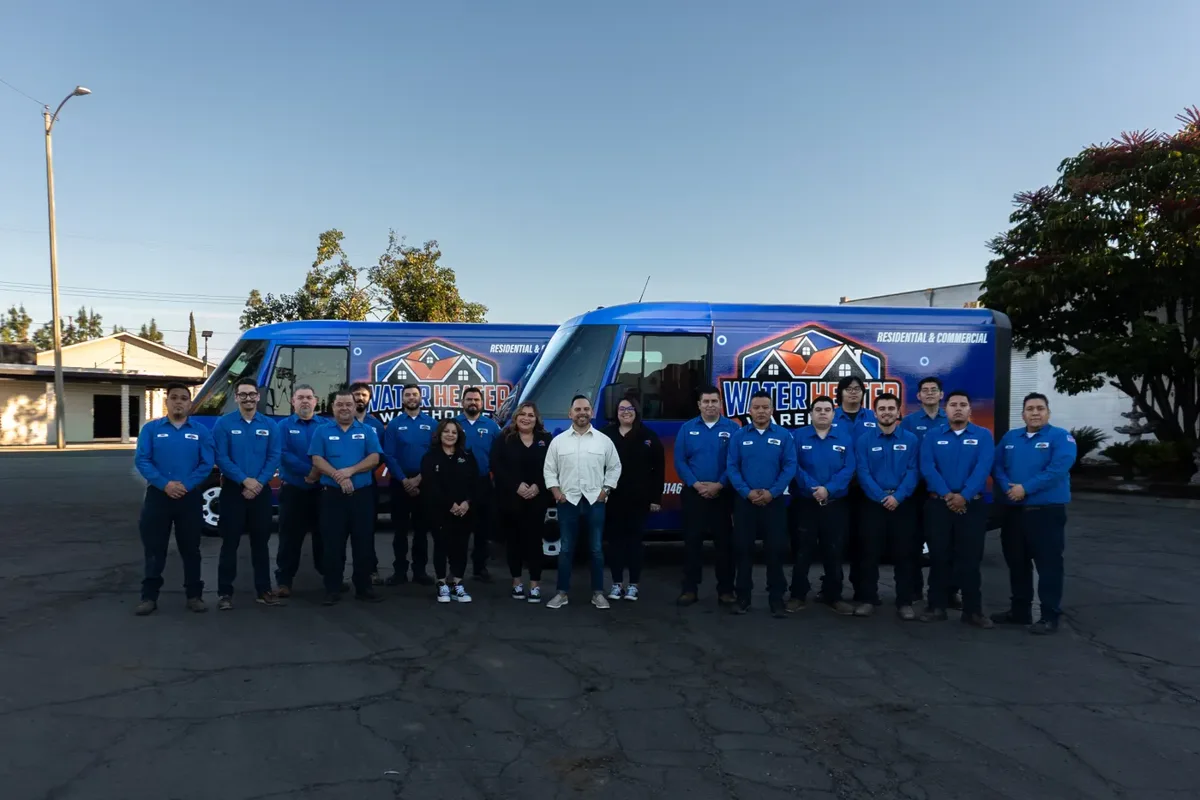
    Water Heater Warehouse team together at the warehouse

    Permits, placement and installation requirements

    Storage tank water heater installation diagram1: Two seismic straps. 2: T&P valve and discharge. 3: Expansion tank. 4: Drain pan. 5: Gas flex and shutoff. 6: Flue123456
    1. 1Two seismic straps
    2. 2T&P valve and discharge
    3. 3Expansion tank
    4. 4Drain pan
    5. 5Gas flex and shutoff
    6. 6Flue

    Replacement permits are required in most cities. Confirm the process for your address instead of assuming work is exempt because the new heater stays in the same spot. Storage tanks need two seismic straps in the upper and lower thirds, with the lower at least four inches above controls. The temperature and pressure relief drain goes to an approved location. A drain pan is added where required, and an expansion tank addresses a closed plumbing system. Local requirements and manufacturer instructions guide the installation.

    Tankless models need gas capacity suited to their input, approved venting and condensate drainage on condensing units. Existing tank piping and venting are not automatically suitable. Heat pump equipment needs manufacturer-specified space and airflow, a condensate drain and a 240V circuit on most models. Electrical requirements are checked for the selected unit. Not every option needs every upgrade, so a proposal should explain the conditions that make each item relevant rather than present one checklist as universal for all installations.

    Which installation fits your household?

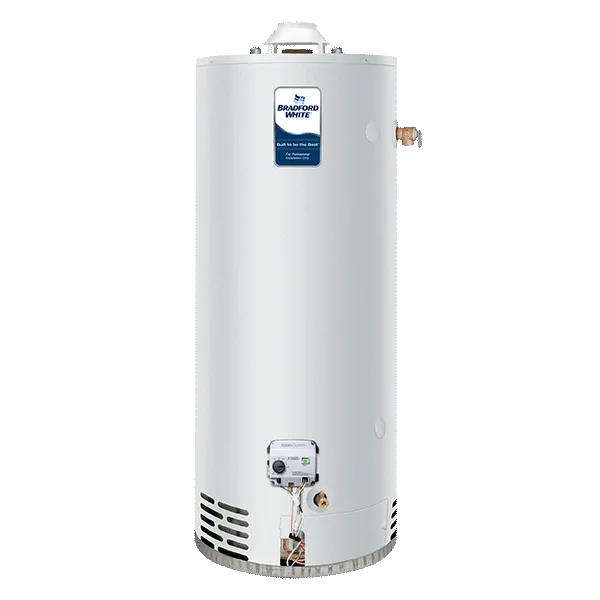
    Bradford White residential storage tank water heater

    Tank

    Hot water supply
    Stores a reserve; replenishes after use
    Space needed
    Tank footprint and service clearances
    Typical lifespan
    Depends on equipment and conditions
    Install complexity
    Fuel, venting and connections
    Best for
    A new tank where storage suits your needs
    Explore tank
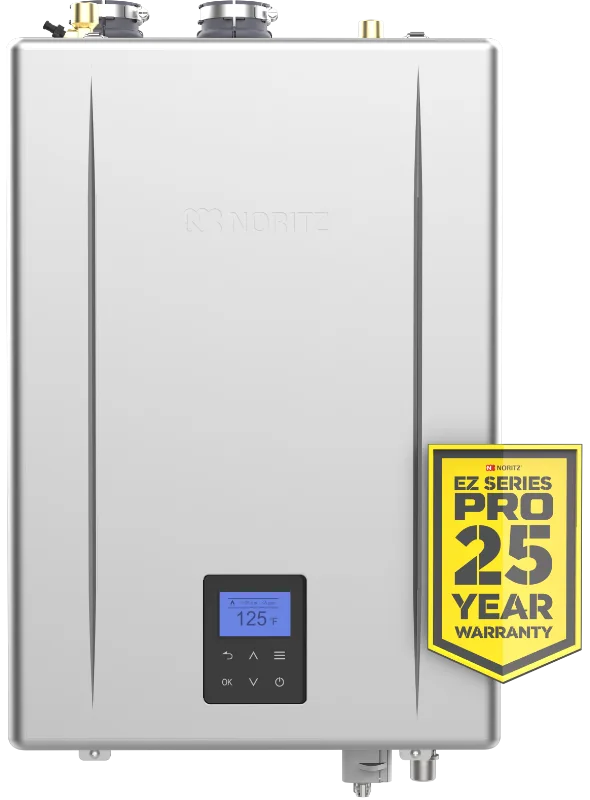
    Noritz tankless water heater product

    Tankless

    Hot water supply
    Heats flowing water; simultaneous demand matters
    Space needed
    Wall mounting and service access
    Typical lifespan
    Depends on equipment and maintenance
    Install complexity
    Gas capacity, venting and drainage
    Best for
    On-demand use with supporting utility work
    Explore tankless
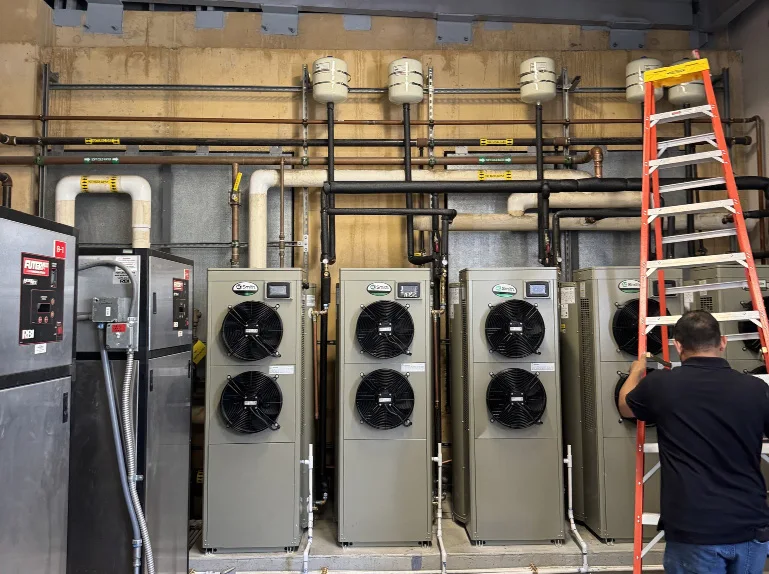
    Heat pump water heaters and connected piping installed at UCI Health

    Heat pump

    Hot water supply
    Stores water; recovery depends on mode
    Space needed
    Airflow, clearance and condensate route
    Typical lifespan
    Depends on equipment and conditions
    Install complexity
    Electrical supply, airflow and drainage
    Best for
    Electric storage where the location suits the model
    Explore heat pump

    What your installation proposal should explain

    • Equipment and model

    • Water and fuel connections

    • Venting requirements

    • Electrical requirements

    • Permits and scope

    • Access and removal

    An installation quote should identify equipment and the work surrounding it. Fuel type, unit size, access, removal and connection changes all affect the scope. Venting or electrical modifications can make two apparently similar proposals different jobs. Relocation introduces new routes and finish-work considerations. Ask for a free quote that makes those items clear. A complete installation comparison should include what is excluded as well as what is supplied; the appliance purchase alone does not describe the work needed to make it operate safely.

    Share photos, model details and access restrictions when requesting an assessment. Mention gates, stairs, a confined closet and any remodeling plans. A permit and inspection may need coordination, and a change of fuel can require separate electrical or utility work. Confirm responsibilities in the proposal. Ask how unforeseen damage to a platform, worn shutoff or incompatible vent will be handled. Do not assume every existing connection can stay or that a conversion has the same installation scope as a direct tank replacement.

    Discuss the scope for your property

    Request service

    What determines the installation schedule

    Scheduling depends on available equipment, access, existing connections and approved modifications. A direct replacement and conversion can involve different work even for the same household. Changing gas supply, circuits or location adds coordination. We confirm the installation plan before giving a job-specific schedule.

    Ask when hot water will be unavailable and whether inspections or utility changes create separate milestones. Equipment startup does not mean an immediate supply at every tap; a tank needs a heating cycle and distant pipes still hold cooled water. Specific completion windows are confirmed after the property review.

    Choose equipment around your actual household demand

    (714) 244-8562

    Google feedback on water heater installation

    Eddie and his partner did a great job of installing a new water heater. Very efficient time wise and good follow-up with checking to make sure that if I had questions he would address them. I recommend the Water Heater Warehouse!

    Ray D.Google review

    Chris and James did a great job with my tankless water heater install. They were professional, courteous, and well prepared for the install. They kept me informed about their arrival time, and as the project proceeded. The entire job was done efficiently and timely. I would highly recommend Chris and James from Water Heater Warehouse if you are considering a new tank or tankless water heater!

    Darryl C.Google review

    Called on Thursday morning, new gas water heater installed by 2pm on Friday. This is my 3rd time using WHW. Twice residential and once for a business. All three experiences were great. Pricing is very fair, along with good customer service. Thanks Chris and your entire crew. Best, Kirk

    Kirk C.Google review
    Read more reviews on Google
    Chris Flores, founder and owner of Water Heater Warehouse

    Who does the work

    Chris Flores, Founder & Owner

    We focus exclusively on water heaters, including traditional tank systems, tankless water heaters, and energy-efficient heat pump water heaters.

    Today, Chris remains deeply involved in daily operations, quality control, and customer experience.

    Meet our team
    Water Heater Warehouse team together at the warehouse

    FAQ

    Should I choose the same capacity as my old heater?

    Not automatically. Demand may have changed, and the old heater may have been poorly matched. Review peak use, recovery and space. A failed component can also make a heater seem undersized. The assessment should separate those possibilities before recommending new equipment.

    Can installation address a planned bathroom addition?

    Yes, equipment selection can account for the additional fixtures and how they will be used. Tell us whether showers overlap and whether a large tub is planned. The supporting gas, electrical and plumbing system must also suit the equipment; adding capacity is not just a larger label.

    Can the new heater go somewhere else?

    Relocation needs a review of the proposed spot and connections to reach it. Drainage, vent termination and service clearances determine practicality. Moving closer to one fixture can lengthen the path to another. We discuss relocation separately so its supporting work is clear.

    Will installing a new heater fix slow delivery at a tap?

    Not necessarily. Long piping and distribution design can delay hot water even when equipment works correctly. Describe the affected fixtures. Recirculation may be worth reviewing separately; it is not an automatic result of choosing tankless or replacing a storage tank.

    What should I prepare for an installation assessment?

    Provide safe access and identify shutoffs, parking restrictions, stairs and fragile finishes. Share model information and current problems. Do not disconnect equipment or remove electrical covers yourself. Ask about location-specific preparation before moving heavy stored items or entering an unsafe area.

    How do I compare installation proposals fairly?

    Compare model specifications and the complete scope: removal, connections, code items, permits and startup. Ask about exclusions and additional-work approval. An equipment-only offer is not necessarily equivalent to a proposal that includes gas, vent or electrical modifications. Request clarification before choosing.

    Choose equipment around your actual household demand

    Call for a free quote and tell us about your existing heater, installation location and planned changes.

    (714) 244-8562