Water Heater Repair in Orange County, CA
Diagnosis and repair for tank and tankless water heaters: no hot water, leaks, pilot problems and error codes. A visit identifies the fault and explains whether a repair can restore safe operation.
CSLB #1041460 · Licensed & insured · Serving OC, LA & the Inland Empire



Request water heater repair
What happens next
- 1
You send the request
- 2
We call to confirm details
- 3
A licensed tech arrives
Which faults can be repaired instead of replacing the heater?
A cold shower does not always mean the whole heater has failed. Tank heaters lose heat because of a thermocouple, gas valve, element or thermostat. Tankless systems stop on an error code tied to ignition, airflow, flow sensing or scale. Call if you notice any of these:
Every repair visit starts with a diagnosis, so you know what failed before you pay for parts. We check whether every hot tap is affected or only one fixture, whether the problem is constant or intermittent, and whether there is a code on the display.
Tank heaters. Most tank repairs involve the gas control, thermocouple or flame sensor, the electric elements and thermostats, the anode rod, or a leaking valve or fitting. If water is coming from the tank body itself, the inner lining has failed and the tank cannot be repaired. In that case we explain tank replacement or same-day replacement.
Tankless heaters. Tankless units report faults with codes. Common causes are scale in the heat exchanger, a dirty inlet filter, a failed flow sensor, ignition problems or venting issues. Write down the code before resetting the unit. See tankless water heater repair and tankless descaling for more detail.
A fitting, drain valve or relief valve leak is different from a corroded tank. We find where the water starts before explaining repair or replacement. Never cap a relief valve or its discharge pipe.
If you smell gas, see sparking or suspect an immediate hazard, leave the area and call emergency services or your gas utility from a safe place. Do not operate switches or attempt repairs. For active leaks, see emergency water heater repair.
For ongoing care, see maintenance plans or a one-time tank flush.
No hot water, or hot water that runs out much sooner than it used to.
Water pooling around the base, a dripping relief valve pipe or wet fittings on top.
A pilot light that will not stay lit, or a burner that clicks but never lights.
A tankless display showing an error code, or bursts of cold water mid-shower.
Popping, rumbling or banging while the heater runs.
Rusty or cloudy hot water, or a rotten-egg smell from the hot taps only.
Diagnosis and the repair work you approve
- 1
Determine whether the loss of hot water affects every fixture or only one tap before testing the heater.
- 2
Inspect gas ignition or electrical heating components as appropriate to the installed model.
- 3
Locate valve and fitting leaks, and distinguish them from failure of the tank body.
- 4
Check tankless fault history, inlet flow and relevant components where an on-demand unit is installed.
- 5
Explain the diagnosed fault and obtain your approval for the proposed part or connection repair.
- 6
Test hot-water operation after the approved repair and discuss any remaining installation or maintenance concerns.
Safety checks during a water heater repair
- 1Two seismic straps
- 2T&P valve and discharge
- 3Expansion tank
- 4Drain pan
- 5Gas flex and shutoff
- 6Flue
A repair does not automatically require replacing every connection. We check the affected equipment and explain applicable corrections. The temperature and pressure relief discharge must remain open and routed to an approved location; it must never be plugged to stop a drip. On a closed plumbing system, thermal expansion also needs to be addressed.
Gas heater repairs include attention to combustion air and the vent path. Electric components must match the equipment and be tested with the supply safely isolated. Tankless repairs follow the model instructions for gas supply, venting and condensate. If a replacement becomes necessary, permit requirements are checked with the local building department.
Parts, access and diagnosis shape a repair quote
Equipment and model
Water and fuel connections
Venting requirements
Electrical requirements
Permits and scope
Access and removal
The failed component, heater model and access to the equipment determine the repair scope. A leaking connection needs different work from a gas control or electric heating element. Testing comes first so a new part does not mask an unresolved pressure, power or combustion problem. Ask for a free quote and describe the symptoms rather than assuming the whole heater needs replacement.
Brand-specific parts may require ordering. A repair can also uncover venting, pressure or electrical conditions that need a separate correction. We explain the component work and any supporting changes before you approve them, rather than treating every cold shower as a new-heater installation.
Discuss the scope for your property
Request serviceWhen a repair can finish in one visit
Many common repairs, such as a thermocouple, igniter, element or relief valve, can be finished in the same visit once the part is on the truck. Repairs that need a brand-specific part, such as some gas valves or tankless circuit boards, may need a second visit once the part arrives.
We tell you during the diagnosis whether the repair can be done today or needs a part ordered.

Who does the work
Chris Flores, Founder & Owner
We focus exclusively on water heaters, including traditional tank systems, tankless water heaters, and energy-efficient heat pump water heaters.
Today, Chris remains deeply involved in daily operations, quality control, and customer experience.
Meet our team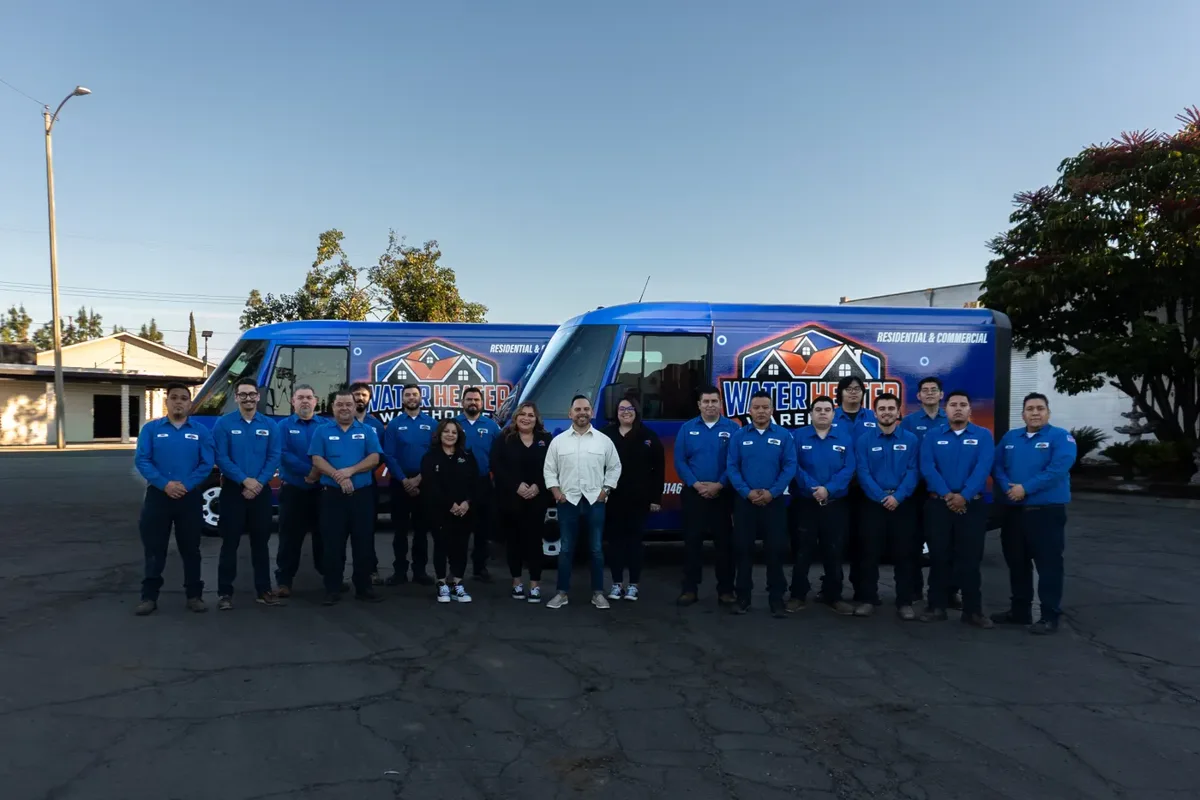
FAQ
Is it worth repairing my water heater or should I replace it?
If the tank is not leaking and the failed part is a thermocouple, igniter, element, thermostat or valve, a repair usually makes sense. If the tank body is leaking or badly corroded, replacement is the only safe option. We explain both after diagnosing the heater.
Why does my water heater have no hot water?
On gas tanks the usual causes are a pilot that will not stay lit, a failed thermocouple or a gas control problem. On electric tanks it is often an element or thermostat. On tankless units, check the display for an error code and tell us the code when you call.
Do you repair tankless water heaters?
Yes. We diagnose tankless error codes, clean inlet filters, descale heat exchangers and replace failed components on brands such as Rinnai, Rheem and A.O. Smith.
Do you tell me the price before starting the repair?
Yes. After the on-site diagnosis we give you an upfront price, and no repair work begins until you approve it.
Is a water leak from my heater an emergency?
Water on the floor can damage the home quickly. Turn off the cold water supply to the heater if you can do so safely, and call us. A dripping relief valve should never be capped.
Which brands do you repair?
We work on gas, electric and tankless water heaters from Rheem, A.O. Smith, Bradford White, Rinnai and other major brands.
Get the cause of your hot-water problem checked
Call for a free quote and describe the symptoms, fuel type and heater location.
(714) 244-8562